monografia
• Gennaio 2026
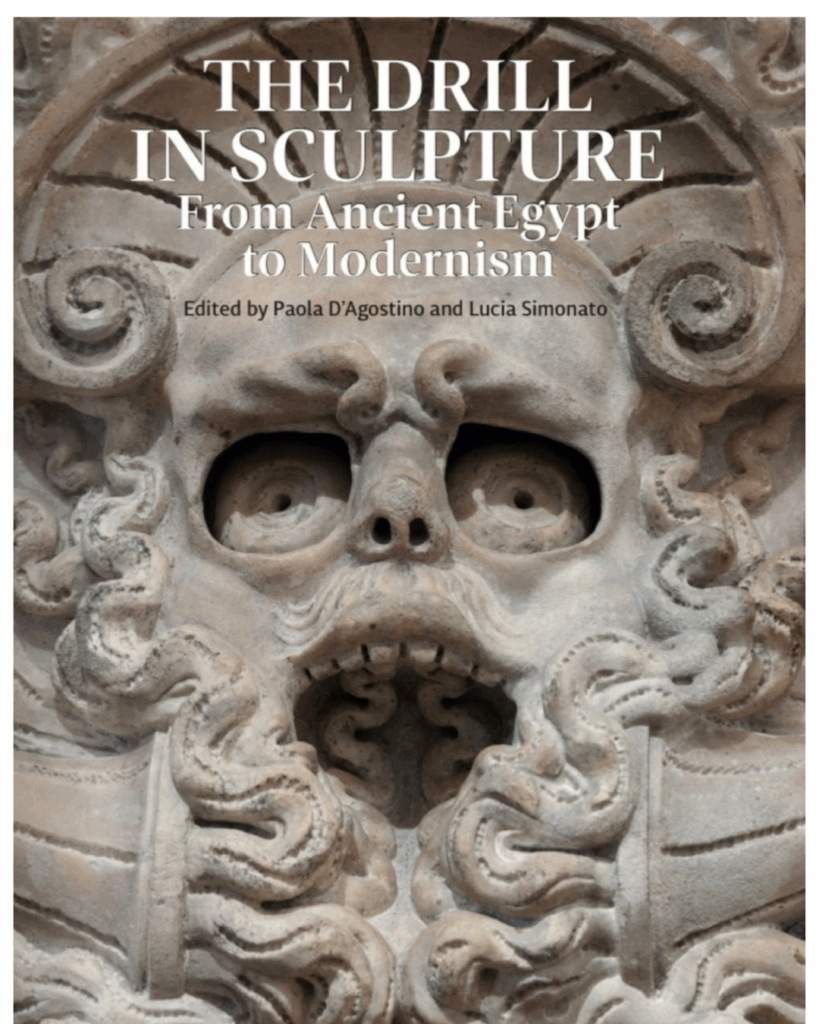
The Drill in Sculpture
Autore: Lucia Simonato, Paola d'Agostino (curatrici)
Editore: Brepols
Lingue di traduzione: italiano>inglese
Traduttori: Jeremy Carden, Sarah Elizabeth Cree
From Ancient Egypt to Modernism
Un volume che ripercorre la storia della scultura occidentale dagli albori a (quasi) i giorni nostri, attraverso l’uso di uno strumento tanto semplice quanto multiforme: il trapano.
Con saggi di storici dell’arte affermati, bellissime illustrazioni, e un taglio avvincente.
Editors’ Preface
“The story of the use of the drill in European sculpture has not yet been written, although it should be fascinating”: so argued Rudolf Wittkower in one of the lectures on the processes and principles of sculpture that he gave as Slade Professor of Fine Arts at Cambridge in 1970. The scientific project that now concludes with this publication picks up on this intuition. It started in 2018 following a proposal made by Lucia Simonato, art historian at the Scuola Normale, and was developed in constant synergy with Paola D’Agostino, then director of the Bargello Museums (2015–2024).
The drill is a key protagonist in the history of human civilisation: used to light fires and build everyday objects, it is evoked by Homer in the Odyssey in the episode of the blinding of Polyphemus, before becoming established as an unrivalled tool for manipulating marble in the hands of Greek artists. The history of sculpture itself cannot be written without considering the drill. In its many forms – bow drills, gimlets, pump drills, to name but a few, the technology of which has not significantly changed for thousands of years – this hand tool has, more than any other, directly tackled the hardness of sculptural materials, drilling and splitting them beyond any apparent limits set by nature. By attacking the very affordance of the material, the drill has allowed the expressive will of sculptors, their visual culture, their frames of reference and their notions of nature and art to emerge, giving us a privileged vantage point for considering historical and personal styles, the history of technique and the theory of art.
Developed in relation to the collections of the Bargello Museums, the project focused on the use of the drill in mainly European and Mediterranean works of art (with some non-European exceptions in introductory parts of the volume), though we are aware that a broader geographical view not only would have been possible, but would certainly have allowed us to confirm and deepen many of the scientific conclusions we arrived at, precisely because the drill is a characteristic feature of human civilization and its use is globally attested in artistic production until the advent of electricity.
The first phase of the project consisted of an international conference, organized by the Bargello Museums and the Scuola Normale Superiore, which was held in Florence in May 2019. The first day of the conference took place at the Museo Nazionale del Bargello, with two sessions looking closely at the museum’s sixteenth-century sculpture collection. On both days, artworks were the point of departure for the analysis and ensuing discussions among scholars from different fields of art history studies, including academics, museum professionals, restorers and other experts.